Race bibs stay readable when they are stored flat and dry in their delivery cartons, sorted by number in order, handed out unfolded and pinned flat on race day. Customized Race Bibs prints Tyvek, standard tear-tab, timing-chip compatible and reusable fabric race bibs, and each material needs slightly different handling between delivery and the finish line.
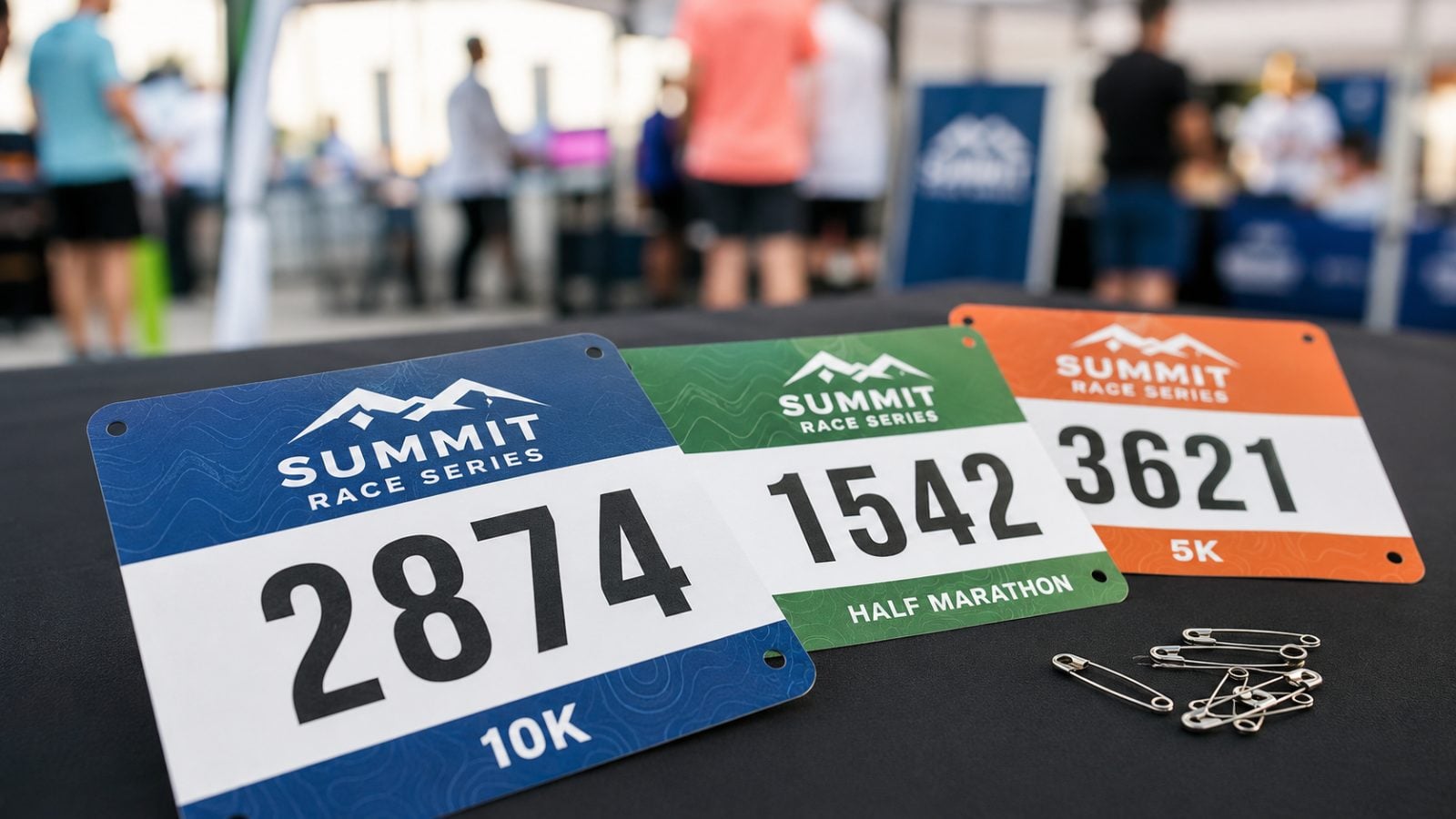
- Store race bibs flat, dry and boxed in number order until packet pickup
- Tyvek race bibs resist rain and sweat; paper tear-tab bibs need to stay dry before the race
- Never fold or crease the chip area of a timing-chip compatible bib
- Reusable fabric bibs can be collected and reused for series events
- Free mockup within 24 hours; standard turnaround about 2 weeks
Why does race bib care matter before race day?
Race bib care matters because a bib that arrives curled, damp or out of order creates problems at the two moments a race director can least afford them: packet pickup and the finish line. A creased number is harder for volunteers and photographers to read, a warped timing-chip bib can cause missed reads, and a box of bibs shuffled out of sequence turns a quick pickup line into a long one.
Most of these problems happen after the bibs leave the printer. Cartons sit in a car trunk, get stacked in a damp garage or are opened early and left on a folding table. None of that is dramatic, but the effect shows up on race morning when runners pin on a bib that will not lie flat.
The good news is that race bib care takes very little effort once there is a plan. The sections below follow the bibs from delivery to the finish, with notes for each material Customized Race Bibs prints.
How do different race bib materials handle weather and wear?
Race bib materials differ most in how they react to water, folding and repeated handling. Tyvek is the most forgiving, standard paper tear-tab bibs need the most protection from moisture before the race, and reusable fabric bibs are built to be worn more than once. Timing-chip compatible bibs add one more rule: the chip area must stay flat.
| Bib type | Handles rain and sweat | Main care point |
|---|---|---|
| Tyvek race bibs | Very well | Store flat so the bib does not curl |
| Standard tear-tab race bibs | Best for dry, short events | Keep dry and away from humid storage |
| Timing-chip compatible bibs | Depends on the base material | Never fold or crease the chip area |
| Reusable fabric race bibs | Very well | Collect, clean and store between events |
If your event regularly sees rain, mud or long hours on course, choosing Tyvek or fabric at the quote stage solves most care issues before they start. For dry, short events, paper tear-tab bibs work well as long as they are stored properly.
What should you do when the race bib delivery arrives?
When race bibs arrive, open one carton to check the order, then keep the rest sealed and flat until you are ready to build packets. Sealed cartons protect bibs from dust, humidity and accidental bending far better than loose stacks on a shelf.
- Check the number range on the first and last bib in each carton against your registration list.
- Look at a few bibs from each carton for print quality, sponsor logos and any personalized names.
- Confirm that timing-chip bibs are flat and the chip area is undamaged.
- Reseal the cartons and label them with the number range on the outside.
- Store the cartons flat, not on their ends, in a dry indoor room.
Avoid garages, car trunks and storage units that swing between hot and cold. Temperature changes and humidity are the main reasons paper bibs curl and adhesive tabs or printed surfaces pick up marks. If anything looks wrong, contact Customized Race Bibs right away so there is time to fix it before race week.
How should race bibs be sorted and packed for packet pickup?
Race bibs should be sorted in strict number order, grouped by wave or distance, and packed into packets flat with no folding. A clean sort is the single biggest factor in how fast packet pickup moves, because volunteers can find a runner’s bib in seconds instead of searching a pile.
Practical steps for packet night:
- Work on a clean, dry table with no drinks nearby.
- Use separate boxes or file trays for each distance or wave, labeled with the number range.
- Place each bib flat in its packet envelope or bag, with pins or other attachments alongside rather than pushed through the bib.
- Keep timing-chip bibs on top of other packet contents so nothing presses into the chip area.
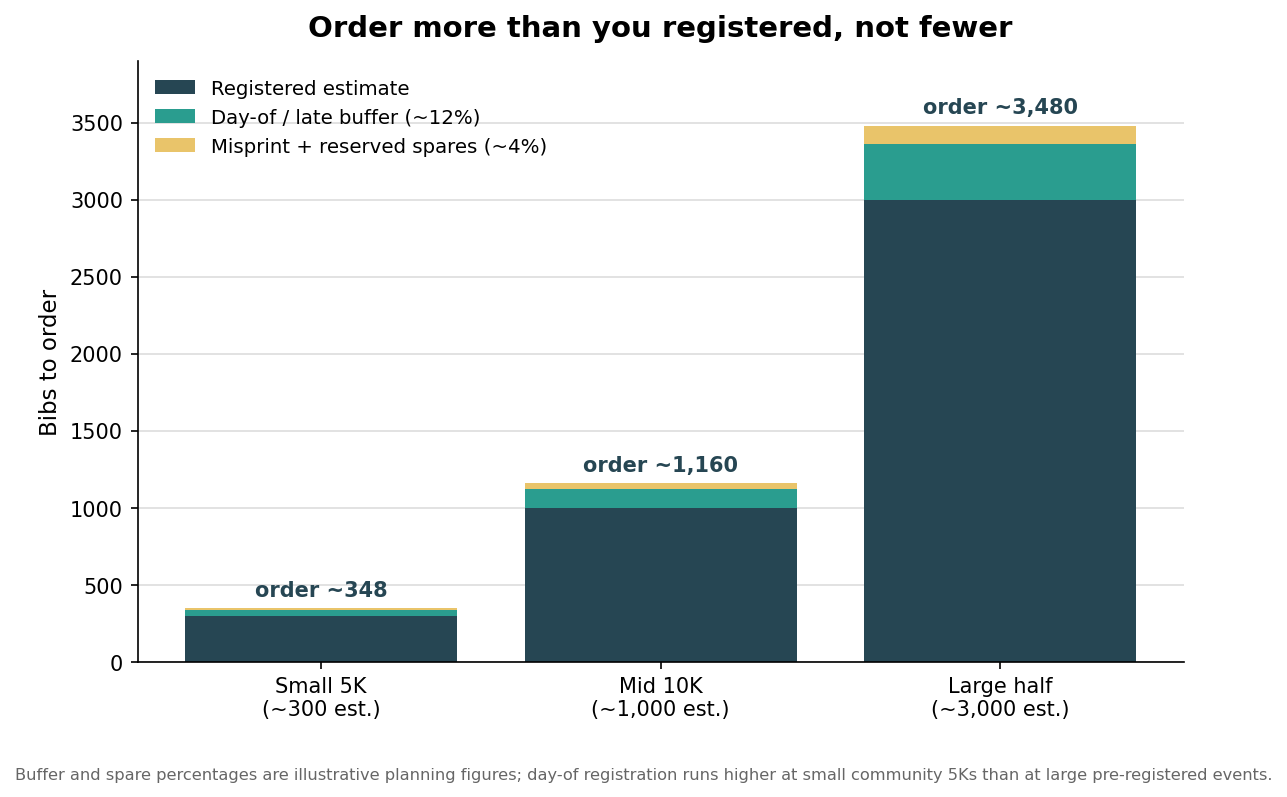
- Set aside a sealed box of spare bibs for late registrations and day-of swaps.
If the race uses personalized names, sort by number first and double-check that the name on each bib matches the registration list. Customized Race Bibs prints sequential numbers and names in the order you supply, so a clean, sorted data file at the artwork stage makes packet night far easier.
How can runners keep their race bibs readable on race morning?
Runners keep race bibs readable by pinning them flat on the front of the outer layer, using all four corners, and not folding or trimming the bib. A bib pinned at only two corners flaps and tears, and a folded bib hides the number from finish-line volunteers and photographers.
Include a short note in the packet or race email covering the basics:
- Pin the race bib on the front, on the outermost layer you will wear at the finish.
- Use all four corners and keep the bib flat across the torso.
- Do not fold, cut or cover the bib with a jacket or race belt.
- For timing-chip bibs, keep the chip area flat and unbent.
- Keep the bib in its packet until race morning so it stays clean and dry.
On wet or cold days, runners often add or remove layers. Remind them to move the bib to whatever they will wear across the finish line. This small instruction prevents many missing results and unidentifiable photos.
What happens to race bibs after the finish line?
After the finish line, most single-use race bibs go home with runners as keepsakes, while reusable fabric bibs are collected for the next event. Planning for both keeps the end of the race tidy and gives runners a reason to hold on to their bib.
For keepsake bibs, a few choices at the design stage make them worth saving: the race name and date printed clearly, a strong event graphic and space for a finish time to be written in by hand. Tyvek bibs survive best in a medal display or scrapbook because they resist creasing and moisture.
For series events or school meets that reuse fabric bibs, set up a collection bin at the finish, let the bibs dry fully before storing them, and keep them flat in labeled boxes by number. Check them before each event and replace any that are worn so every runner starts with a clean, readable number.
Where can race directors get help choosing the right bib material?
Race directors can get help choosing a race bib material by sharing the event type, expected weather, timing setup and whether bibs will be reused on the Customized Race Bibs quote form. The team recommends a material and returns a free mockup within 24 hours, with unlimited free revisions and no payment until you approve the design.
Standard turnaround is about 2 weeks, with faster turnaround available with express shipping. The how it works page explains each step, and events with special meaning, such as memorial runs and tribute 5Ks, often choose Tyvek so the bib lasts as a keepsake.
Frequently asked questions
Which race bib material holds up best in heavy rain?
Tyvek race bibs and reusable fabric race bibs hold up best in heavy rain because neither material softens or tears when wet. Standard paper tear-tab bibs suit dry, shorter events better. Customized Race Bibs recommends Tyvek for spring races, trail events and any course where runners are likely to finish soaked, so numbers stay readable for volunteers and photographers.
Why do race bibs curl, and how can I prevent it?
Race bibs curl mainly when they are stored on their ends or exposed to humidity and temperature swings. Keep cartons sealed and lying flat in a dry indoor room until packet night, and avoid garages and car trunks. Customized Race Bibs ships bibs packed flat, so keeping them that way is usually all a race director needs to do.
Can timing-chip race bibs be folded into a packet envelope?
Timing-chip race bibs should never be folded, because bending the chip area can affect how well the chip reads at the mats. Choose packet envelopes or bags large enough to hold the bib flat. Customized Race Bibs can advise on bib dimensions at the quote stage so the bibs fit the packets you already plan to use.
How should race bibs be organized for a fast packet pickup?
Race bibs are fastest to hand out when they are sorted in number order, split by distance or wave and stored in labeled boxes showing each number range. Volunteers then find any runner's bib in seconds. Customized Race Bibs prints numbers in the sequence you supply, which makes a clean sort on packet night much easier.
What should a race director check first when race bibs are delivered?
Race directors should first check the number range at the start and end of each carton against the registration list. Next, look at a sample of race bibs for print quality, sponsor logos and personalized names. Report anything unexpected to Customized Race Bibs right away so there is time to correct it well before race week.
How many pins should runners use to attach a race bib?
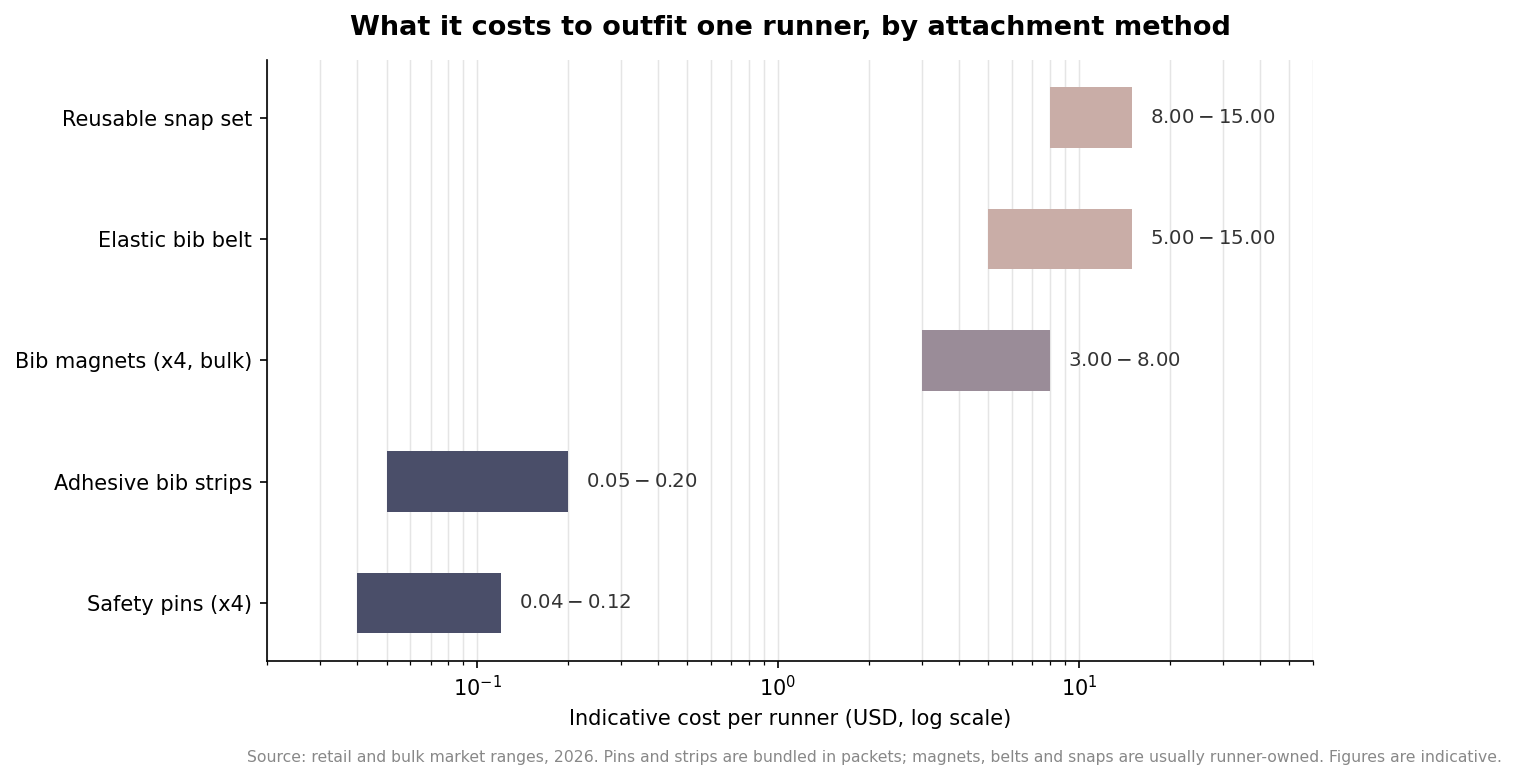
Runners should attach a race bib with a pin at each of the four corners so the bib lies flat and does not flap or tear. Two pins leave the bib loose and the number often folds out of view. Customized Race Bibs suggests putting this reminder in the packet or the pre-race email.
How should reusable fabric race bibs be looked after between events?
Reusable fabric race bibs are made to be worn at more than one event, so series organizers and schools collect them at the finish. Let each bib dry fully before boxing it, store the set flat by number and inspect it before the next race. Customized Race Bibs can supply replacements that match the original design.
Do paper race bibs work for an outdoor race in cold weather?
Paper race bibs can work for a cold outdoor race if conditions are dry, but frost, sleet or melting snow can soften them. For winter events where moisture is likely, Tyvek race bibs are the safer choice. Customized Race Bibs helps match the bib material to your forecast and course when you request a quote.
How should spare race bibs be stored for race-day registration?
Spare race bibs for race-day registration should stay in a sealed, labeled box with the number range on the outside until they are needed. Keep the box at the registration table, not with the main packets, so numbers are not mixed up. Customized Race Bibs can include a spare number range in the same print run.
What makes a race bib worth keeping as a souvenir?
A race bib becomes a souvenir when it shows the race name, date and a memorable event graphic clearly, and when the material survives being saved. Tyvek race bibs resist creasing, which suits medal displays and scrapbooks. Customized Race Bibs can add a blank space for runners to write in their finish time.
Should race bibs be handed out before race day or on the morning?
Race bibs handed out before race day reduce morning congestion, but runners then need reminders to keep the bib flat, dry and in its packet at home. Morning pickup keeps bibs in your control but needs more volunteers. Customized Race Bibs prints Tyvek options that tolerate a few days in a runner's bag better than paper.
Get a free mockup for your race bibs
Send your logo or idea and the quantity you have in mind. Customized Race Bibs returns a free mockup within 24 hours, you approve the design before anything is produced, and standard turnaround is about two weeks with faster options available. Get a custom quote.