The most common race-bib ordering mistake is arithmetic, not design. A director takes the current registration count, orders exactly that many bibs, and then spends race morning improvising when forty walk-up runners appear and a stack of bibs turns out water-spotted from a leaky tent. Ordering the right quantity, and numbering it so the pile makes sense at 6 a.m., is a small planning exercise with a few reliable rules. Here is how to size and structure a bib order so the packet table runs itself.
Start from your registration estimate
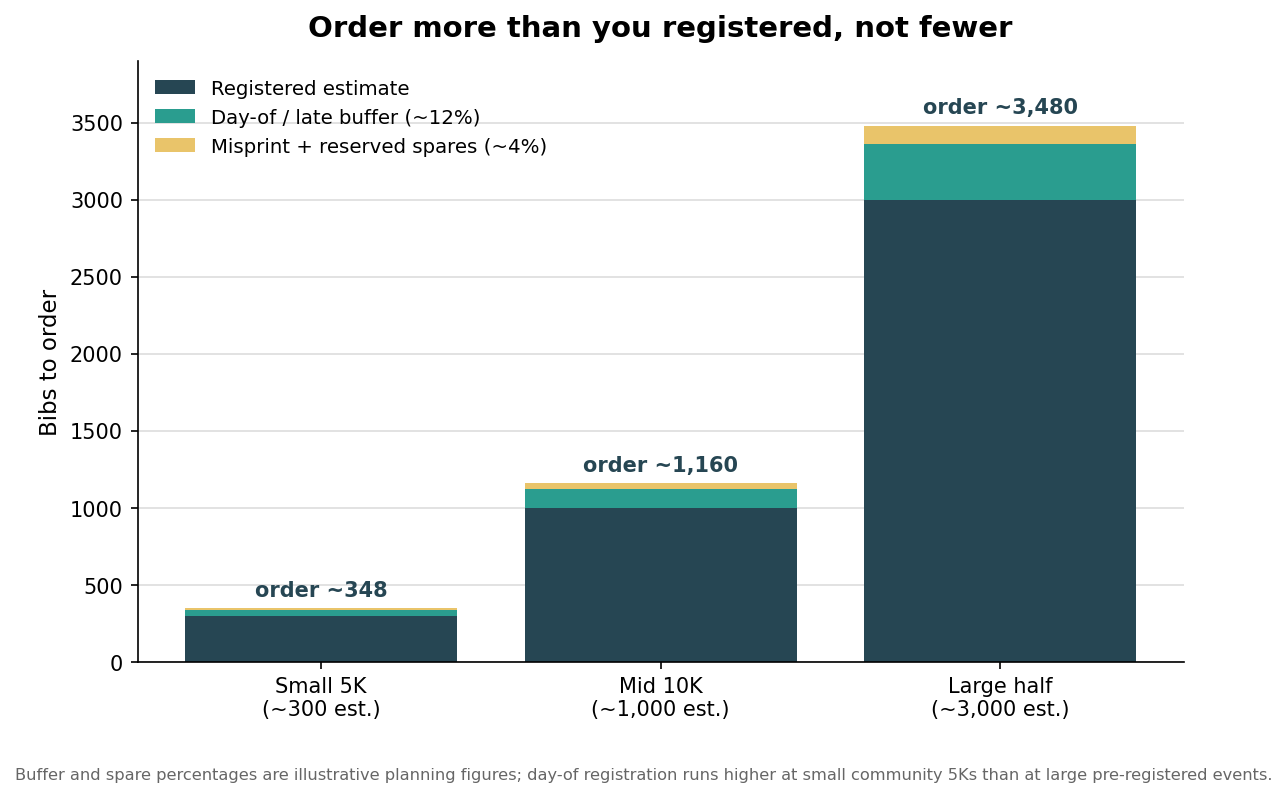
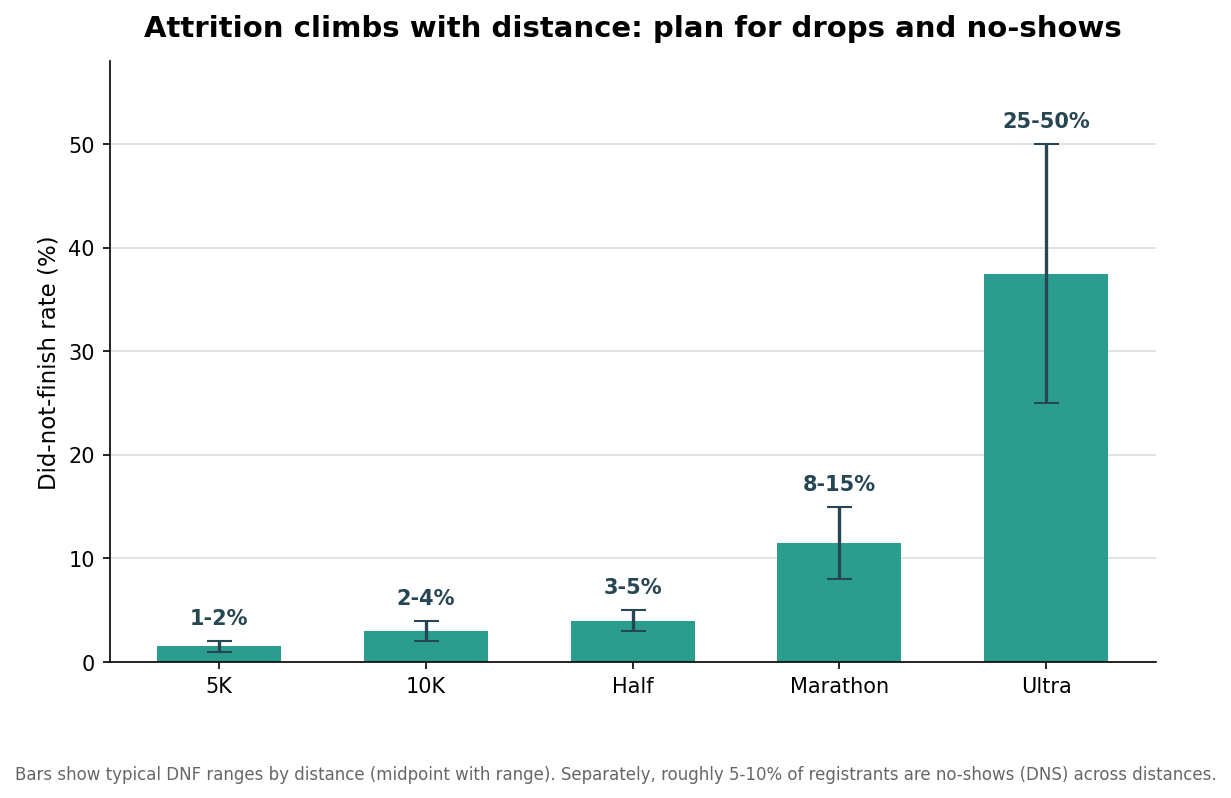
Begin with a realistic projection of total registrations, not today’s count, because most events pick up a meaningful share of sign-ups in the final two weeks. Then resist the instinct to trim for no-shows. Roughly 5 to 10 percent of registered runners never start, but that fact does not shrink your order, because each of those runners already has a number assigned and a bib printed with it. No-shows are bibs you produce and never hand out; they are not bibs you skip. The registration estimate is your floor, and everything else in the order sits on top of it.
Add a buffer for day-of and late registration
The number that actually protects you is the walk-up buffer. Community 5Ks and charity runs can take a surprising share of their field on race morning, so a buffer in the range of 10 to 15 percent over projected registration is sensible for those events; large, mostly pre-registered races with hard caps can run leaner. These extra bibs should be generic — carrying the event branding and a number but no pre-printed name — so they can go to anyone who signs up at the table. If your bibs are personalized with runner names, order a separate block of blank-name bibs specifically for day-of entrants, because you cannot personalize on site.
Add spares for spoilage, VIPs, and media
On top of the walk-up buffer, add a smaller pool of spares, commonly around 3 to 5 percent. These cover the bibs that get creased, water-damaged, or misprinted, the replacements for runners who tear or lose theirs, and the handful you will want to reserve for people who are not in the registration system at all: elite invitees, sponsors, staff, photographers, and press. Reserving a dedicated low-number block for these roles keeps them out of the general sequence and makes them easy to find in a hurry. It is cheaper to have thirty spare bibs you never open than to be one bib short when a sponsor’s chief executive shows up to run.
Numbering that survives race morning
How you number the bibs matters as much as how many you order. Start the sequence at a round number rather than 1 — beginning at 100, or 1001 for a larger field, keeps every bib the same digit width, which reads more cleanly at the finish line and in photos, and leaves a low block free for VIP and staff numbers. If your event uses waves or corrals, assign each start group its own number range so the bib itself tells a volunteer which wave a runner belongs to; a runner wearing 2140 is visibly in the 2000s corral. Leave gaps between blocks for late additions, and if the race is chip-timed, remember that each number is tied to a specific RFID tag, so a reprinted or reassigned bib has to be re-associated in the timing system rather than simply swapped. Finally, decide deliberately whether numbers carry across years; reusing a loyal runner’s number can be a nice touch, but only when you plan the sequence around it rather than discovering the collision on order day.
Sort the order so pickup runs fast
A well-sized, well-numbered order can still create a bottleneck if it arrives as one undifferentiated stack. Decide before the bibs ship how packet pickup will be organized, because that choice determines how you want the print run split and boxed. Most events pull bibs by number, so having them delivered in clean numeric blocks, banded or bagged in ranges such as 100 to 199 and 200 to 299, lets volunteers find a runner’s bib in seconds. If pickup is organized alphabetically by last name instead, you will need the registration export mapped to numbers so each packet can be pre-assembled, which is far easier to do in the days before the event than in a scramble at the table. Keep the reserved VIP, staff, and day-of blocks physically separate from the general sequence, clearly labeled, so nobody hands a sponsor bib to the wrong runner. The generic walk-up bibs belong in their own bin at the registration station, ready to issue without touching the pre-sorted packets. None of this changes what you order, but it changes how usable the order is at 6 a.m., and it is worth settling while you still have the print shop on the line.
A note on size and lead time
Standard race bibs land around 5.5 by 7.5 inches, large enough for a bold number and sponsor logos while still sitting comfortably on a torso; marquee events sometimes go larger for elite and marketing visibility. Whatever size and quantity you settle on, place the order early. Bibs need time for proofing and production, and that window tightens during peak race season when print shops are busiest, so locking your numbers and artwork well ahead of race week is the cheapest insurance in the whole plan. Build the count from registration up through buffer and spares, structure the numbering around your waves, and the bib pile becomes one less thing to manage on race morning.
Leave a Reply