Plan custom race bibs backward from packet pickup, not from the start gun. Customized Race Bibs returns a free mockup within 24 hours and ships standard orders in about 2 weeks after you approve the proof, so the real deadline is the day your artwork, number range and sponsor logos are final. Everything below works back from that date.
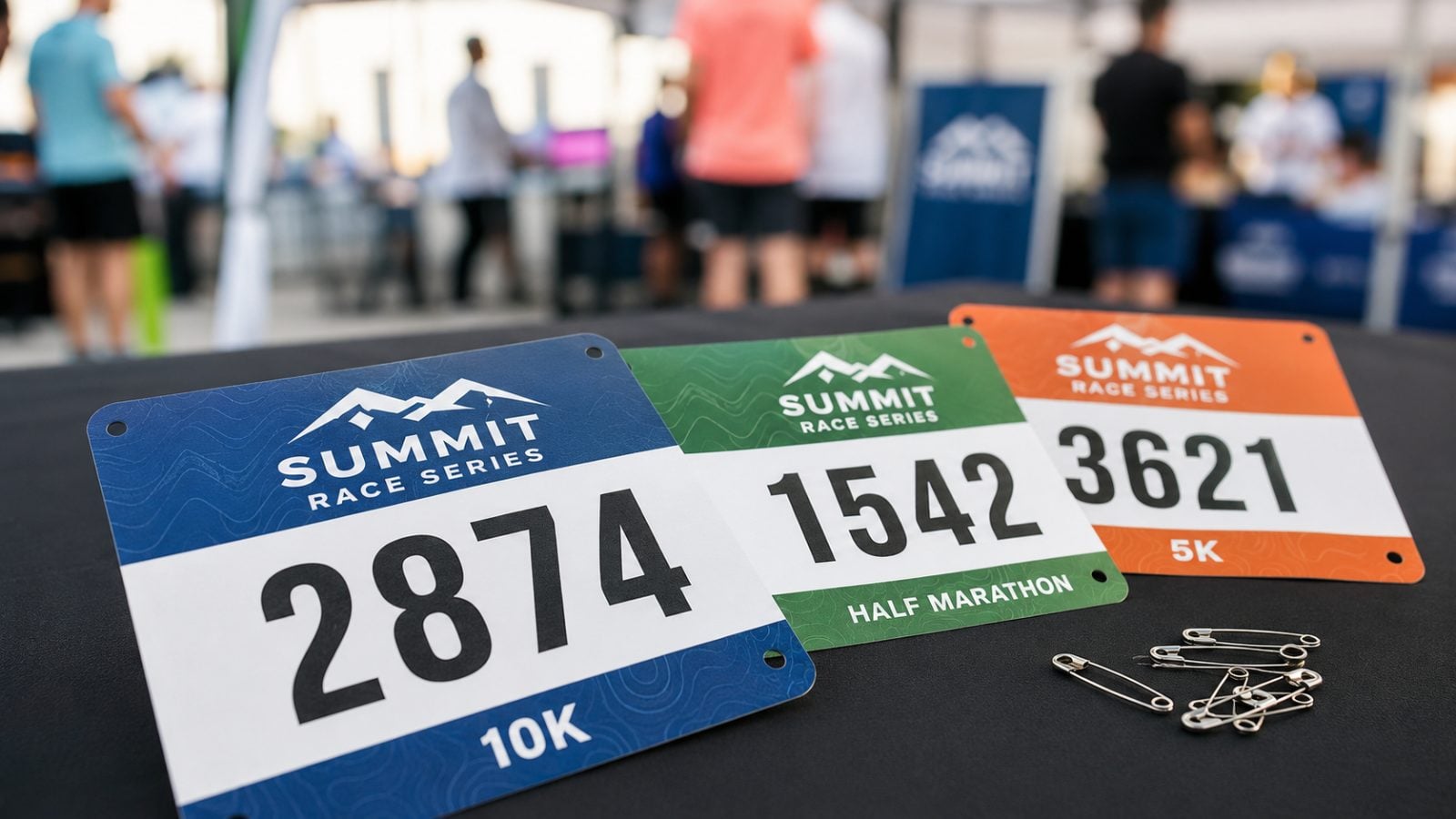
- Free digital mockup returned within 24 hours of your request
- Standard turnaround is about 2 weeks after proof approval
- Faster turnaround is available with express shipping
- Minimum order is 12 race bibs
- Unlimited free revisions and nothing to pay until you approve the design
When should you order custom race bibs for a race?
Order custom race bibs as soon as your sponsor list and number range are settled, then work backward from packet pickup rather than race morning. Customized Race Bibs needs about 2 weeks of production and shipping after you approve the proof, and the proof itself comes back within 24 hours, so the schedule mostly depends on how fast your own team signs off.
The mistake most race directors make is anchoring the order to the race date. Bibs have to be counted, sorted by corral or distance, stuffed into packets and sometimes handed to a timing company before anyone pins one on. That work happens days before the event, and it is the true finish line for your bib order.
A simple rule: pick the day volunteers start building packets, subtract roughly 2 weeks for production, subtract a few more days for your own approvals, and that is the latest comfortable day to request a quote. Earlier is always calmer, because earlier gives you room to fix a sponsor logo or add a distance without paying for faster shipping.
What does a backward race bib schedule look like?
A backward race bib schedule has five checkpoints, each tied to a decision rather than a calendar date. Plug in your own packet-pickup day and count back. The table below shows what has to be true at each checkpoint before the next one can start.
| Checkpoint | What must be decided | Who usually owns it |
|---|---|---|
| Quote request | Bib style, rough quantity, distances or waves | Race director |
| Mockup review | Logo placement, colors, number font, tear tabs | Director plus lead sponsor |
| Proof approval | Final number range, any names, sponsor marks | Director, registration lead |
| Production and shipping | Nothing – about 2 weeks of waiting | Customized Race Bibs |
| Packet build | Sorting by distance, matching numbers to runners | Volunteer captain |
Notice that only one row is outside your control. The mockup arrives within 24 hours, and revisions are unlimited and free, so every day lost before production is usually a day spent waiting on an internal answer. Assign each checkpoint an owner and a date the moment you request the quote.
Which decisions slow a race bib order down the most?
Three decisions slow race bib orders down more than anything in production: an unfinished sponsor lineup, an open-ended number range, and late changes to distances or waves. Each one forces a new proof, and every new proof pushes the approval date that starts the roughly 2-week production clock.
- Sponsors still signing. If a title sponsor is not confirmed, ask Customized Race Bibs for a mockup with a reserved logo zone. You can review layout and colors now and drop the logo in later without redesigning the bib.
- Number ranges that keep moving. Decide whether the half marathon starts at one block of numbers and the 5K at another, and fix those ranges before approval. Changing them later affects tear tabs and any timing setup.
- Personalized names. Printing runner names on each bib means waiting for a registration export. If registration stays open late, consider names on most bibs and blank name lines for late entries.
Settle these early and the rest of the race bib timeline is predictable: mockup, revisions, approval, about 2 weeks, delivery.
How do you handle late registrations after bibs are printed?
Handle late registrations by ordering a reserve block of unassigned race bibs in the same print run. Customized Race Bibs can print a sequential range that extends past your expected field, so race-day sign-ups receive a matching bib from the same batch instead of a mismatched backup.
Reserve bibs work best when they carry no runner name and sit at the end of the number range, or in a separate range that your timing partner already knows about. Keep them sorted by distance so a volunteer at the late-registration table can grab the next number without guessing.
For races that sell out in waves, there is a second option: approve the main run on schedule, then place a small top-up order for the final wave. The minimum order is 12 race bibs, which makes a short top-up practical, but remember the top-up has its own roughly 2-week production window. If registration closes too close to race day for that, the reserve block is the safer plan.
Whichever route you choose, write the reserve count into the proof notes so nobody on your team assumes the extra bibs were a mistake.
How does a timing-chip bib change the schedule?
A timing-chip bib adds one checkpoint to the race bib schedule: confirming chip placement and number format with your timing company before you approve the proof. Customized Race Bibs prints the bib, and your timing partner usually supplies or programs the chip, so both sides need to agree on the layout before production starts.
Ask your timing company three questions early in the planning window:
- Where on the bib should the chip or chip zone sit, and does anything need to stay clear of ink?
- Does the number range need a specific format, such as a set number of digits or a prefix by distance?
- Will they attach chips themselves, and when do they need the printed bibs in hand to do it?
That third answer often moves your real deadline earlier than packet pickup, because the bibs travel to the timing company first. Build that hop into the backward schedule. The timing-chip compatible bib page shows the style built for this workflow, and the mockup lets the timing company check the layout within a day of your request.
Do different bib styles need different lead times?
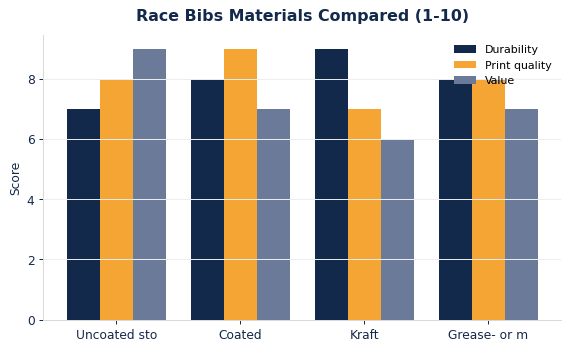
Most race bib styles follow the same standard turnaround of about 2 weeks after approval, but some styles need more decisions before approval, which stretches the front half of the schedule. The production window stays steady; the planning window is what changes.
| Bib style | Extra decisions before approval |
|---|---|
| Standard tear-tab bib | How many tabs and what each one is for (gear check, post-race food, finisher item) |
| Tyvek waterproof bib | Usually none beyond artwork – a good default when weather is uncertain |
| Youth race bib | Smaller layout, larger numbers, and whether school or team names appear |
| VIP or pace group bib | Pace times or group labels, colors that stand apart from the main field |
| Reusable fabric race bib | Whether the bib serves one race or a whole series, which affects how numbers are assigned |
If you are mixing styles in one event, approve them together. A single approval date keeps every style on the same roughly 2-week clock and arriving in one shipment.
What if race day is closer than the standard turnaround?
When race day is closer than the standard turnaround, the fastest lever is your own approval speed, followed by express shipping. Customized Race Bibs returns a mockup within 24 hours, so a director who answers the same day can move from quote to approved proof very quickly, and faster turnaround is available with express shipping.
To compress the schedule safely:
- Send final artwork, the full number range and the sponsor list with the first quote request, not in later emails.
- Name one person who can approve the proof without a committee meeting.
- Choose a style with fewer open decisions, such as a standard tear-tab or Tyvek waterproof bib, rather than adding personalized names.
- Ship directly to whoever builds packets, or to your timing company if chips are attached there.
Tell the team your packet-pickup date when you request the quote. That date, not the race date, is what the production and shipping plan is built around, and it is the honest way to see whether express shipping is needed.
What should the final week before packet pickup look like?
The final week before packet pickup is for checking race bibs, not designing them. Open every box when it arrives, confirm the number ranges against your registration list, and pull a few bibs from each distance to check colors, tear tabs and sponsor marks against the approved proof.
Then sort. Group race bibs by distance or wave, set the reserve block aside for late registration, and label each box so packet volunteers can work without asking questions. If chips are going on at the timing company, confirm they have what they need and when bibs come back.
Keep a short punch list: missing numbers, damaged bibs, any name that changed after export. Small fixes are easier to handle with reserve bibs than with a new order this late. When the next race on your calendar comes up, start its backward schedule from this one, because the approved proof makes a reorder much faster to review.
Frequently asked questions
When should a race director start planning a custom race bib order?
A race director should start planning custom race bibs as soon as the sponsor lineup and distances are settled. Work backward from the day volunteers build packets, allow about 2 weeks for production and shipping after proof approval, then add a few days for your own reviews. Customized Race Bibs returns the first mockup within 24 hours, so internal decisions are usually the slowest step.
What should be finalized before requesting a race bib mockup?
Race bib mockups go fastest when you send the bib style, distances or waves, a rough quantity and your logo file with the request. Sponsor logos and the final number range can follow, but every missing item means another round of review. Customized Race Bibs offers unlimited free revisions, so a mockup with a reserved sponsor zone is a perfectly reasonable starting point.
Can race bibs be approved before registration closes?
Race bibs can be approved before registration closes if you print a reserve block of unassigned numbers in the same run. Late entrants then receive a matching bib from that block. Customized Race Bibs can extend a sequential range past your expected field, which keeps the main order on schedule while still covering race-week sign-ups and transfers.
Is a small top-up order of race bibs possible for a final registration wave?
Race bib top-up orders are possible because the minimum order at Customized Race Bibs is 12. A top-up follows the same process as the main run, including a proof and roughly 2 weeks of production and shipping after approval. If your last registration wave closes too close to race day for that window, a reserve block printed with the main order is safer.
When should the timing company see the race bib proof?
Timing companies should see the race bib proof before you approve it, not after delivery. They need to confirm chip placement, any ink-free zones and the number format. Share the 24-hour mockup from Customized Race Bibs with them right away, and ask when they need printed bibs in hand if they attach the chips themselves.
Does a reusable fabric race bib need a different planning approach?
Reusable fabric race bibs follow the same standard turnaround of about 2 weeks after approval, but the planning questions differ. Decide whether each runner keeps one number for a full series or whether bibs are collected and reissued. That choice shapes the number range and any names, so settle it before approving the proof.
How does the packet pickup date change a race bib deadline?
Packet pickup is the real deadline for race bibs, because bibs must be counted, sorted and stuffed before runners collect them. Give Customized Race Bibs your packet-pickup date, not just your race date, when requesting a quote. The production and shipping plan, including whether express shipping makes sense, is then built around the day volunteers actually need the boxes.
What happens to the race bib schedule if a sponsor changes after approval?
Race bibs already in production cannot absorb a sponsor change without a new proof, which restarts the roughly 2-week clock from the new approval. To avoid that, approve with a reserved logo zone if a sponsor is unconfirmed, or keep sponsor marks on packet materials instead. Customized Race Bibs will revise the mockup as often as needed before approval.
Can one approval cover several bib styles for the same event?
Race bib orders can combine several styles under one approval, such as standard tear-tab bibs for the main field and pace group bibs for leaders. Approving them together keeps every style on the same production clock and shipping together. Customized Race Bibs shows each style in the mockup so you can compare colors and numbering side by side.
How should a race series schedule reorders of race bibs?
Race series organizers should schedule each reorder of race bibs from that event's packet-pickup date, using the previous approved proof as a starting point. Updating dates, distances or sponsors on an existing design reviews quickly, and Customized Race Bibs returns the revised mockup within 24 hours. Starting each backward schedule right after the previous race finishes keeps the series predictable.
What should volunteers check when race bib boxes arrive?
Race bib boxes should be opened on arrival, not on packet night. Volunteers should confirm number ranges against the registration list, pull samples from each distance to compare with the approved proof, and set the reserve block aside. If anything is wrong or damaged, flag it to Customized Race Bibs immediately while there is still time to respond.
Get a free mockup for your race bibs
Send your logo or idea and the quantity you have in mind. Customized Race Bibs returns a free mockup within 24 hours, you approve the design before anything is produced, and standard turnaround is about two weeks with faster options available. Get a custom quote.